The Lundgaard Lab was founded in 2017 by a starting grant from the Knut & Alice Wallenberg Foundation and is part of the Wallenberg Centre for Molecular Medicine (WCMM) at Lund University Sweeden.
The research at Lundgaard Lab revolves around the Glymphatic System which due to its relatively recent discovery, holds great potential for new and groundbreaking discoveries in the field of neurodegenerative diseases.
The Lab
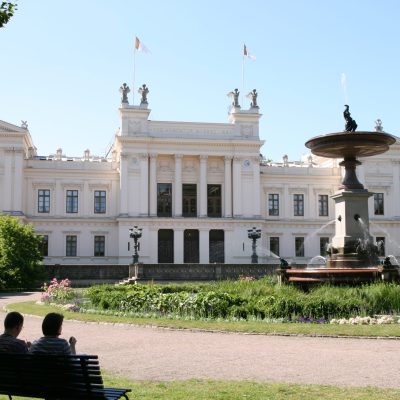
Lund University
Lund University was founded in 1666 and it is repeatedly ranked among the world’s top 100 universities. The University has around 44 000 students and a staff of more than 8000 spread across Lund, Helsingborg, and Malmö. We are united in our efforts to understand, explain and improve our world and the human condition.
The Department for Experimental Medicine counts 60 independent research groups and excellent core facilities, and it continues to grow, making it is a modern and vibrant place to both work and study.
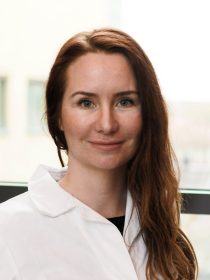
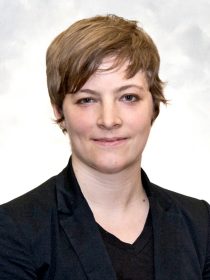
Iben is a non-obligate vegetarian (Christmas roast and paté excluded), from Svendborg, Denmark. She likes cats, studying brains and learning about medical research. Her favorite TV show is ‘The Bridge’. Likes asking Swedes whether the town Lund was founded by the Danes, pretending to not already know the answer. Her dream is to cure Alzheimer’s disease by targeting the glymphatic system. The name Iben is derived from the word ‘ibenholt’ which means ebony in Danish.
Early Career
Principal investigator Iben Lundgaard has, during her Master’s degree in Molecular Biology, obtained experience from aging lab, Suresh Rattan, Na/K ATPase in Nobel laureate Jens Christian Skou’s lab at University of Aarhus and apoptosis and calcium binding proteins in Martin Berchtold’s lab at University of Copenhagen. After a short internship in electrophysiology at University of Copenhagen, Iben started her PhD in the UK.
PhD
Iben Lundgaard did a PhD in neuroscience with Ragnhildur Thora Karadottir and Robin Franklin at University of Cambridge, UK, 2008-2012. The main findings of her PhD thesis were that growth factors neuregulin and BDNF interact with neuronal activity to control myelination and that remyelination after injury is dependent on glutamate receptors.
Postdoctoral training
Dr. Lundgaard worked with Maiken Nedergaard at University of Rochester where the glymphatic system was discovered. During her time in the Nedergaard lab Dr. Lundgaard gained detailed knowledge on the glymphatic system, see for example the study on delivery of glucose from the CSF to the brain parenchyma via the glymphatic system. After 2 years, Dr. Lundgaard was promoted to assistant professor and stayed for another two and a half years to continue glymphatic research in multiple disease models. A number of projects from the Rochester lab are still on-going and will be continued in the new lab at Lund University.
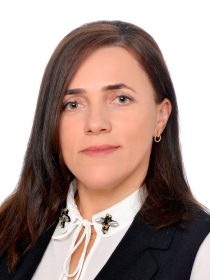
Oksana Tymoshchuk is from a strong and independent Ukraine and is proud of it. She worked as a professor of medicine at the Ivano-Forankiv National Medical University (IFNMU), where she engaged in preventive medicine as well as studied the quality of life and psychophysiological functions of pupils and students of modern educational institutions. She built her personal life and career and never thought of changing her country of residence. But war radically changed the life of every Ukrainian. Oksana was forced to take care of her children and therefore left for Sweden, where she now applies her clinical and research expertise to investigate the glymphatic system. Oksana has also mentored Ukrainian medical students from IFNMU to complete an internship at Lund University and was one of the initiators of the local Summer School for Students project. Oksana’s name means traveler, and traveling is certainly her passion. She dreams of victory and peace in Ukraine!
Ana is a postdoctoral researcher from Seville, Spain, with a background in Biochemistry, Immunology, and Molecular Medicine. Her research focuses on the interactions between the glymphatic system, astrocytes, and the immune system in neurodegenerative and demyelinating diseases such as Alzheimer’s disease and multiple sclerosis. Before joining the Lundgaard Lab, she completed her Ph.D. at the University of Seville, where she investigated the immunomodulatory effects of melatonin in experimental models of multiple sclerosis. Ana is deeply interested in understanding how neuroimmune mechanisms contribute to neuroinflammation. Outside the lab, she enjoys reading, exploring new cultures, and traveling — especially when it involves discovering local food and landscapes.
Jari Jukkola
Ph.D. in cerebral hydrodynamics
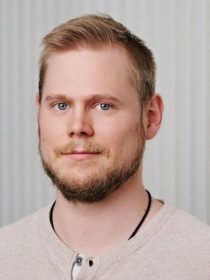
Jari got familiar with the glymphatic system in rodents during his Ph.D. studies in Oulu, Finland. He hopes to transfer his expertise in mice to pigs during his postdoctoral period in Lund. In his free-time, which is non-existent as a father of a 3-year-old, he writes fiction to flush his brain from work-related thoughts and tries to promote Finnish sauna culture in the BMC gym. Jari is particularly fond of mountains and has plans to someday visit Mount Jukkola in Antarctica.
B.A. in Neurobiology, M.Sc. in Korean Medicine, M.Sc. in Biomedical Engineering, Ph.D. in Biomedical Engineering
Kelley Swanberg is a biomedical engineer with a specialization in magnetic resonance (MR), including magnetic resonance imaging (MRI) and especially in vivo proton magnetic resonance spectroscopy (1H MRS). During her career thus far Kelley has engaged in both methodological and applied investigations of MRI/S and its uses in both the lab and clinic, in addition to previous work in other subfields of preclinical and human neuroscience. Here Kelley is developing new ways to use magnetic resonance imaging and spectroscopy to investigate fluid flow through the glymphatic system in living bodies. Kelley’s favorite North American mammal is the opossum because they have the friendliest smiles and also the most teeth (50).
MD-PhD student, BSc in Anatomy and Developmental Biology and a MSc in Molecular Biology
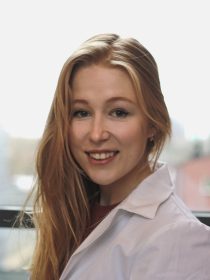
Tekla hails from Finland, so winter in Lund feels like a summer holiday to her! Tekla has a BSc in Anatomy and Developmental Biology from King’s College London and a MSc in Molecular Biology from Lund University. Her favourite pastime is shocking people with her transparent optically cleared mice and scanning her friends with the 7 Tesla MRI. When Tekla isn’t studying CSF flow or attending med school classes, you’ll probably find her playing tennis, dancing ballet or knitting a cosy sweater.
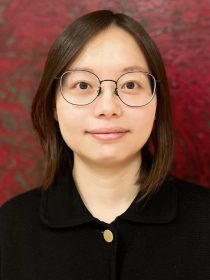
Na is from Guangzhou, a warm southern city of China. During her Master’s program in China, she found her research passion in studying the glymphatic system. She wants to gain more research experience before going back to clinical training to become a neurologist. This is the reason she came to Sweden for a Ph.D. journey, although she has previously said that the main reason was her desire to travel around Europe. Na currently works on studying the interaction between immune cells, especially macrophages, and the glymphatic system. In Skåne, Na has discovered a love for hiking, a hobby that allows her to explore the natural beauty of southern Sweden, although she occasionally longs for the taste of a classic Cantonese brunch (Zao Cha) that’s not readily available in her new surroundings.
Bo is from Tianjin, a vibrant city in northern China. He completed his Master’s degree in Neurosurgery at Tianjin Medical University, where he trained under two leading neurosurgeons, Professors Jianning Zhang and Rongcai Jiang. They are the principal inventors of a novel drug-based treatment for subdural hematomas, which has offered a non-surgical option to thousands of patients and transformed clinical practice in the field. During his time in China, Bo gained extensive clinical experience in neurosurgery and developed a strong interest in the underlying mechanisms of brain diseases. As a visiting scholar in Sweden, Bo is now expanding his academic horizons by studying the glymphatic system and its role in brain health and disease. He is particularly interested in how cerebrospinal fluid dynamics relate to neurological disorders. Outside of research, Bo is fascinated by European culture and enjoys exploring Sweden’s nature, history, and architecture. He hopes to one day bridge clinical neurosurgery and basic science through international collaboration—and to contribute to improving patient care both in China and globally.
Mohamed Sallam
B.Sc. in Biochemistry and Chemistry, M.Sc. in Nanotechnology, Ph.D. in Molecular Chemical Sciences
Mohamed Sallam works at the intersection of radiotheranostics, imaging, and targeted drug delivery, with a focus on helping promising ideas move closer to clinical use. His work involves developing next generation radiopharmaceutical platforms that bring together CNS targeted delivery, nanobody engineering, and biomarker responsive imaging, always guided by benign-by-design principles and a thoughtful approach to impact. Since October 2024, Mohamed has been a Postdoctoral Research Fellow at the Inflammation Research Centre, VIB Ghent University, where he develops advanced CNS targeted systems that integrate imaging and therapy. Alongside his academic work, he has been involved in business innovation and early stage entrepreneurial activities in Europe, Asia, and Australia, gaining experience in technology translation, start-up ecosystems, and industry collaboration. He is motivated by careful science, practical problem solving, and the belief that meaningful progress often happens quietly, at the intersection of curiosity and responsibility.
Marios Kritsilis
MD
Alumnus
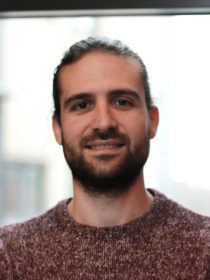
Marios is a medical doctor from Athens, Greece. His passion for neurosciences brought him to the North to study the complex physiological mechanisms underlying the glymphatic system. He enjoys hiking and watching Swedish cinema, although he secretly misses the warm greek weather.